

Endless Vendetta was my final year university game project, in which I and a team of 11 students came to create an open-world fps RPG. That was an insane idea, so it was heavily scoped down, and we made a vertical slice. We cut out a lot of the proposed game idea, whilst keeping our core design pillars, that being the hardcore gameplay, the atmospheric setting and the role-playing elements of the game. In the end, we created a small playable demo of what could be a larger game
Click the image on the left or this text to view the Itch.io page for the game!
The game is a realistic FPS game that features bounties (set missions in areas specifically moulded for that bounty) that progress the main story and boast high payouts, or exploration of the world, where you can meet unique NPC’s and do side activities to prepare for the next bounty or side quest that progress your relationship with your crew.
The realism aspect of the gameplay involves gunplay and damage, where each combat encounter is deadly and requires smart decision-making and planning to be completed effectively. Guns have realistic recoil and feel heavy and brutal as if each shot impacts the world or other characters.
Bounties are split into 3 different variations. Big, side and hits. Big bounties are main mission set pieces that feature multiple pathways and ways to play through them. Once started, it has to be finished. Side bounties are found in the exploration of the world and are small missions that can unlock new opportunities for big bounties, like a distraction, fewer guards, an open pathway, an item, etc. Hits are also found in the exploration of the open world but are objectives located in the open world and only award experience and cash.
View the Endless Vendetta trailer here or in the box to the right.
I recorded, edited, and storyboarded the trailer. The music was also made by me.
My Contributions
-
Overall game concept. I came up with the idea, the world, the gameplay loop, the setting, the characters and the theme.
-
Combat Design
-
Game narrative.
-
Created Design Doc
-
Character dialogue
-
Music and sound design
-
Level design
-
Blueprinting music system
-
Scrum master
-
Voice acting director
-
Voice acting
-
QA Tester
-
the landscape art assets
View the design doc below
(click image)
Snippets and rationale


The design of the game stemmed from multiple idea-generating sessions where I would take gameplay genres, mechanics and environments and use a random number generator to create multiple mashups of elements to create different game ideas. Endless Vendetta was the idea that resonated most with me and my peers. I expanded on what I envisioned the game to be using elements from other games within the FPS, RPG and Immersive sim genres. Over time, I came up with the game loop, story and characters, all stemming from the themes of revenge and the act of chasing turning into running away. After that, I began creating and integrating the design doc and finally finished it. Whilst the final version of Endless Vendetta was scoped down, not including all the content mentioned, many of the core concepts still stem from the design doc.
Combat Design
The game's combat design was primarily based on PvE combat, with difficulty scaling based on enemy/item tiers.


We based the combat balancing around item/enemy tiers, with supporting abilities through companion skill trees. We decided through the use of playtesting. Testing with just item/enemy tiers, just skills and a mix of both. We found that the progression and freedom that item tiers gave the player was more engaging than traditional RPG leveling. However, we kept RPG levelling in the form of companion skill trees, where the player could learn strong passive abilities from companions. This gave the player the freedom to customize their build, with some companions being more suited for stealth, some more suited for combat, etc., giving the player the freedom of item tiers but also providing multiple play styles that traditional RPGs allow for.
How do the tiers work? The tiers range from 1 to 5, and in each higher tier, weapons do more damage, and enemies have more health. The item/enemy tier system also allows us to present enemy tiers diegetically. Certain enemy factions would be capped at certain tiers, with visible body armour or clothing showcasing their tier. A regular criminal with a pistol would be tier 1, but that same enemy with body armour and an upgraded pistol would be of a higher tier.
The player could acquire the next tier of weapons through 3 different methods. The first method would be through upgrading with scrap. This method would be more difficult than the other two, however, the added benefit would be keeping the attachments the player had fixed onto the weapon. The other 2 methods would be much more simple, and that would be either buying a higher tier weapon or picking it up off of a higher tier enemy. Extra health and body armour would be available for purchase.
Narrative
Revenge, isn't it sweet? Well, in the world of Endless Vendetta, not many things are. Your parents are dead, and your uncle's to blame. The streets were kind enough to allow you to survive them, even rule them, but you're not satisfied. You need to avenge your parents and find your uncle by any means necessary. The mayor of New Miami offers you information as long as you complete his... not-so-legal assignments. The more you get roped into the murder of your parents, the less sure you are about the truth. Was it your uncle? Are they really dead? Was it a setup? You don't think you want to be involved with this anymore, but the lead you oh so dearly chased is now what you're trying to get away from.
The world and characters

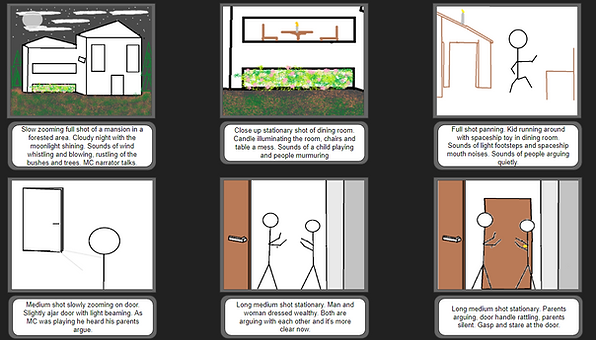
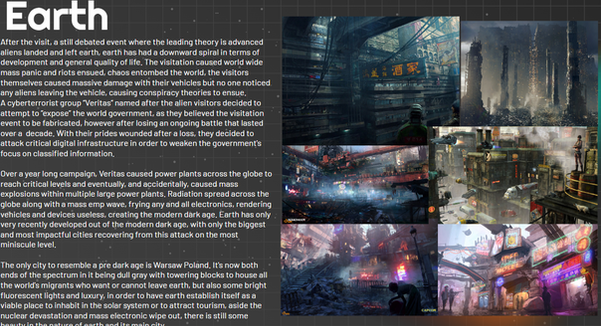

For the game's narrative, I timelined the history of the world and created detailed area descriptions, a storyboard and character profiles. I did all this and more to embed the feeling of immersion within the player to allow them to suspend their disbelief. The ideas and characters came from building upon the original idea generation session for the game, using my creativity to develop certain character tropes and form a character and a fitting personality around that. The same goes for the world itself.
Dialogue
(click the images for an expanded view)


For Character Dialogue, I utilised Draw.io to construct a flowchart of the player's dialogue choice and the NPC responses. The player could also make choices within the dialogue that affect character relations. After completing the flow chart, I would implement it within the engine into the dialogue system created by our programmer. There were also some idle lines that NPCs would say randomly, depending on whether the player was around them.
(click the image to view the script!)
Game script
Before the game was heavily scoped down, I began writing a script for the game, and whilst the game has changed quite a lot, the game still resembles aspects of the script.
Production
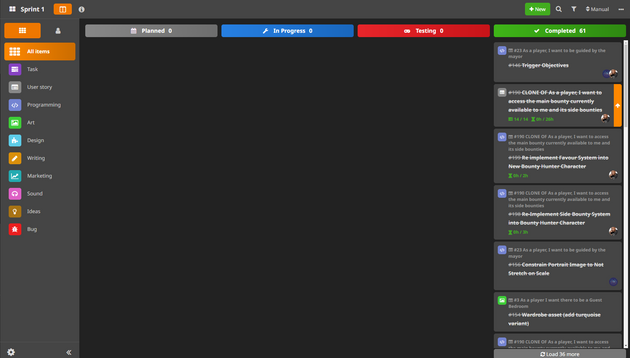

On the production side of development, I took charge as scrum master throughout all of pre-production and production. We initially began using Trello as our project management software, however, we soon switched over to using HacknPlan. We decided to make a switch to HacknPlan as it was much easier to organise into categories and had many niche features which made planning, specifically for game projects, a bit easier than using any other software. We also used Fork, a git client, which allows for changes to the project without changing the code of the original repository, making collaboration much easier. We followed a standardised git convention to avoid confusion and allow for easier readability when scanning any pushes.


landscape art
The Landscapes seen in the gallery were all created by me using the Gaea landscape generation software. The landscapes seen in the gallery were meant to be used within the game but due to scope all but the hill landscapes were removed from the game, however, they can still be seen within the trailer of Endless Vendetta.
I made a couple of tracks for the game, notably a dynamic stealth/combat track that builds upon the game's enemy awareness system. Whilst you're at level 0 of the enemy awareness (in a restricted area) only hi-hats play; when you ramp up into level 1 (searching) the drums kick in; and when you're in level 2 (combat,) 808s play and the tempo is ramped up.
Music
I also created a music system that would randomly play an idle track. It would only play when the player wasn't in any restricted areas or not in combat. It would slowly fade in and out and provide an ethereal atmosphere to the game.
(click the images below to see it better)


We wanted to make Endless Vendetta to create an immersive large project in Unreal Engine, expanding our knowledge of Unreal Engine and overall honing our skills in game development.
We also want to get into industry and other than for indie studios, unreal Engine is the industry standard for game developers, along with C++, hence Unreal Engine was the choice for us.
The game idea came from our hearts and all of us wanted to make this game, it was a passion project before it was a university game, and that passion is reflected in the gameplay and story of the game.
Rationale